
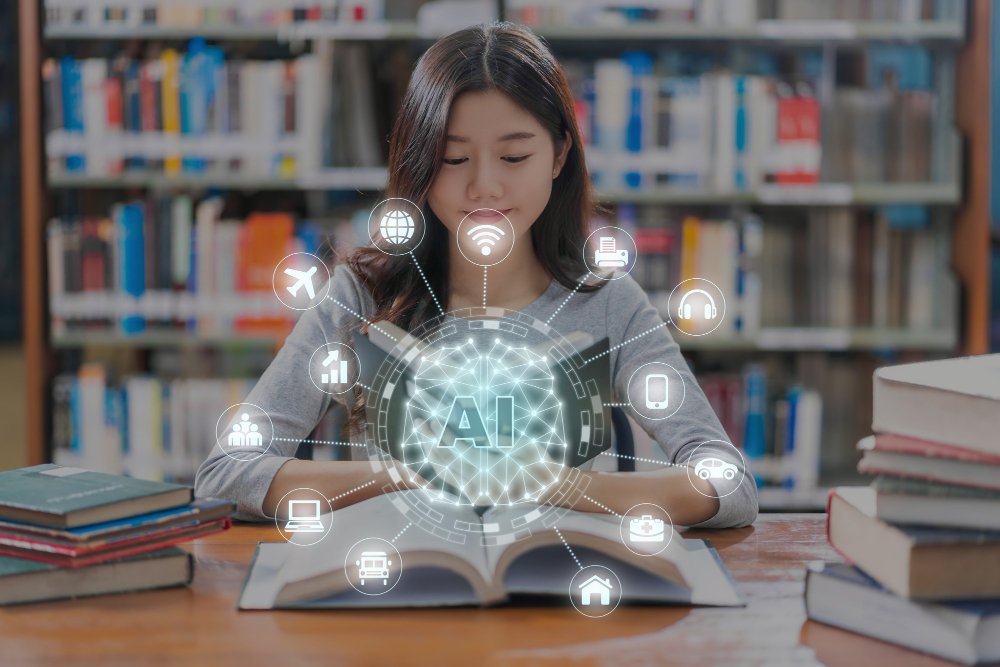
Education accessibility has long been challenged by barriers that prevent equal access to learning opportunities, from physical disabilities and geographic limitations to economic constraints and linguistic differences. Artificial intelligence in education is revolutionizing educational accessibility by creating adaptive systems that automatically accommodate diverse needs and remove traditional obstacles to learning. This technological transformation represents a fundamental shift toward inclusive education powered by AI, ensuring learning environments serve all students regardless of their circumstances or challenges.
Understanding Educational Accessibility Challenges
Traditional educational systems often create unintentional barriers that exclude learners with disabilities, language differences, economic limitations, or geographic constraints. These barriers not only limit individual opportunities but also deprive society of diverse perspectives and talents that could contribute to innovation and progress.
The importance of AI in education becomes particularly evident when considering the scalability challenges of providing individualized accommodations. Manual accommodation processes are time-intensive, costly, and often inadequate for addressing the full spectrum of accessibility needs across diverse learner populations.
AI-Powered Assistive Technologies
Modern AI assistive technologies address specific accessibility needs without requiring complex manual configuration. These systems utilize machine learning in education to understand individual accommodation requirements and adapt educational content accordingly.
Competencies based learning approaches benefit significantly from AI accessibility features that can assess competency demonstration through multiple modalities, ensuring that learners with different abilities can demonstrate their knowledge and skills through their most effective channels. This multi-modal assessment capability transforms how educational success is measured and achieved.
Visual Accessibility and AI Enhancement
AI visual accessibility tools can automatically generate image descriptions, convert visual content to audio format, and create tactile representations of visual information. These systems utilize advanced computer vision algorithms to interpret visual content and provide comprehensive alternative formats that maintain educational integrity while accommodating diverse visual capabilities.
Advanced educational technology demonstrates this capability through automatic content adaptation features that ensure visual learners, auditory learners, and those with visual impairments can access identical educational content through their preferred or necessary modalities.
Language Processing and Translation Capabilities
Advanced natural language processing enables AI systems to provide real-time translation, language complexity adjustment, and cultural context adaptation that makes educational content accessible across linguistic barriers. These Ai tools can automatically adjust vocabulary complexity, sentence structure, and cultural references based on learner profiles.
The primary advantage of using generative AI in content creation extends to multilingual content generation that maintains educational effectiveness while adapting to diverse linguistic needs and cultural contexts. This capability eliminates language as a barrier to accessing high-quality educational content, creating truly global learning opportunities.
Adaptive User Interfaces and Interaction Design
AI systems can automatically adjust user interfaces based on individual accessibility needs, motor capabilities, and interaction preferences. These adaptive interfaces can modify button sizes, navigation methods, color schemes, and interaction patterns to optimize usability for each individual learner without compromising functionality.
Motor accessibility features include voice control integration, gesture recognition, eye-tracking compatibility, and switch navigation support. These AI-powered adaptations enable learners with diverse physical capabilities to interact effectively with educational systems while maintaining dignity and independence in their learning journey.
Cognitive Accessibility and Learning Support
AI systems excel in providing cognitive accessibility support through automatic content complexity adjustment, attention management tools, and cognitive load optimization. These systems can identify when learners are experiencing cognitive overload and automatically adjust content presentation to maintain optimal learning conditions without reducing educational rigor.
Skill based education programs benefit from AI cognitive support that can break complex skills into manageable components, provide multi-step guidance, and offer repeated practice opportunities adapted to individual cognitive processing preferences. This approach ensures that cognitive differences become strengths rather than barriers to learning success.
Economic Accessibility Through AI Efficiency
AI-powered education platforms can significantly reduce the cost of providing high-quality education by automating many traditionally labor-intensive processes. This cost reduction makes advanced educational opportunities accessible to learners regardless of their economic circumstances, democratizing access to world-class education.
Corporate learning management systems (LMS) with AI accessibility features can provide comprehensive training opportunities to all employees regardless of their individual accommodation needs, creating more inclusive workplace learning environments that promote career advancement equity. This economic accessibility extends beyond individual benefit to create more diverse and capable workforces.
Real-World Implementation and Success Stories
Educational institutions worldwide are already experiencing transformative results from AI accessibility solutions. The World Economic Forum estimates that these tools could benefit over 700 million children globally who face learning barriers, representing an unprecedented opportunity for global educational equity.
Modern learning platforms now automatically generate adaptive interfaces, voice instructions, translated transcripts, and visual aids on demand, demonstrating the practical implementation of comprehensive accessibility solutions that operate seamlessly and efficiently.
Future of Inclusive Education
As AI accessibility technology continues to advance, we can expect even more sophisticated systems that anticipate and address accessibility needs before they become barriers. The integration of predictive analytics with accessibility features will enable proactive accommodation rather than reactive support, creating truly inclusive learning environments from the outset.
Conclusion
AI’s role in educational accessibility represents more than technological advancement—it embodies a fundamental commitment to educational equity and human potential. By automatically removing barriers and creating adaptive learning environments, AI ensures that every learner, regardless of their individual challenges or circumstances, has access to high-quality educational opportunities.
The future of education lies in these intelligent, inclusive systems that recognize diversity as a strength and automatically adapt to serve every learner effectively. Educational institutions that embrace AI accessibility solutions will lead the transformation toward truly universal education that serves all members of our global community.