
In 2025, we’re witnessing a fundamental shift in how career opportunities are accessed and developed. AI-powered learning platforms are breaking down traditional barriers that once limited professional growth to those with the right geographic location, financial resources, or educational pedigree. This technological revolution isn’t just changing how we learn—it’s completely democratizing career advancement for millions of professionals worldwide.
The numbers tell a compelling story: the global adaptive learning market is projected to surge from $2.87 billion in 2024 to $4.39 billion in 2025, representing an extraordinary 52.7% year-over-year growth. This isn’t just market expansion—it’s evidence of a seismic shift toward personalized, accessible education that’s reshaping the entire landscape of professional development.
Breaking Geographic Barriers: From Tier-3 Towns to Global Careers
1. The Location Disadvantage is Disappearing
Traditionally, career opportunities were heavily concentrated in major metropolitan areas. Students from smaller towns faced a stark choice: relocate to expensive cities for quality education or accept limited local opportunities. AI-powered learning platforms have fundamentally altered this equation by delivering world-class education directly to learners regardless of their physical location.
Platforms like AiXQP demonstrate this transformation in action. Students from tier-3 towns in India can now access the same quality of AI education as their counterparts in Bangalore or Mumbai. The platform’s adaptive technology ensures that local context, language preferences, and cultural nuances are considered while maintaining globally competitive standards.
2. Real-Time Skill Matching with Global Opportunities
AI systems now analyze job market trends in real-time, identifying emerging skill demands across industries and geographies. This capability allows learners in remote areas to prepare for opportunities that may not yet exist in their immediate vicinity but are growing rapidly in global markets.
For instance, a student in rural Karnataka can develop expertise in machine learning engineering—a field that’s seeing explosive growth with companies actively seeking qualified professionals. The AI learning system tracks which specific skills (TensorFlow, PyTorch, deep learning) are most in demand and customizes the learning path accordingly.
Personalized Learning: Tailoring Education to Individual Strengths
1. Adaptive Pathways Replace One-Size-Fits-All
Traditional education often failed students who didn’t fit the standard learning model. AI-powered platforms create individualized learning experiences that adapt to each person’s unique strengths, learning style, and career objectives.
The technology analyzes how learners interact with content—which concepts they grasp quickly, where they struggle, and what teaching methods resonate most effectively. This data drives real-time adjustments to create optimal learning experiences for each individual.
2. Accelerated Skill Development Through Personalization
By focusing on each learner’s specific needs and eliminating time spent on already-mastered concepts, AI-powered learning dramatically accelerates skill development. Learners can progress through material at their optimal pace, spending more time on challenging areas while quickly advancing through familiar territory.
This personalization is particularly powerful for career changers who bring existing skills from other fields. An experienced project manager transitioning to AI might accelerate through organizational and analytical components while spending more time on technical programming concepts.
Democratizing Access to High-Quality Education
1. Breaking Down Financial Barriers
Traditional quality education often comes with prohibitive costs—expensive degrees, costly certifications, and the opportunity cost of full-time study. AI-powered learning platforms deliver comparable or superior education at a fraction of the cost, making career advancement accessible to learners regardless of their financial situation.
The scalability of AI-driven education means that world-class instruction can be delivered to thousands of students simultaneously without proportionally increasing costs. This economic efficiency translates into more affordable learning opportunities for individuals.
2. Continuous Learning for Working Professionals
AI-powered platforms recognize that modern careers require continuous skill development. Unlike traditional education models that require full-time commitment, these systems accommodate working professionals through flexible scheduling and bite-sized learning modules.
Professionals can maintain their current income while developing new competencies, making career transition more feasible for those with financial responsibilities. The AI system tracks progress and ensures consistency despite irregular study schedules.
The Rise of Skill-Based Hiring
1. Companies Prioritize Competency Over Credentials
Major technology companies including Google, Apple, and Microsoft have eliminated college degree requirements for many positions, instead focusing on demonstrated skills and capabilities. This shift toward skill-based hiring directly benefits learners who’ve developed competencies through AI-powered platforms rather than traditional degree programs.
AI learning systems are uniquely positioned to prepare students for this new reality by focusing on practical, applicable skills rather than theoretical knowledge. Learners develop portfolios of real-world projects that demonstrate their capabilities to potential employers.
2. Industry-Aligned Skill Development
AI-powered platforms continuously analyze job market data to ensure their curricula align with current industry needs. This dynamic approach means learners are always developing market-ready skills rather than outdated competencies.
For example, the platforms track the rising demand for AI ethics consultants, robotics engineers, and AI product managers—emerging roles that traditional educational institutions haven’t yet incorporated into their programs. Learners can begin developing these competencies immediately, positioning themselves ahead of the curve.
Expanding Career Opportunities Across Industries
1. Healthcare Transformation
The healthcare industry exemplifies how AI-powered learning democratizes career opportunities. Traditional medical education requires years of expensive schooling, but AI platforms now enable professionals to develop specialized skills in healthcare AI, medical data analysis, and clinical decision support systems.
Healthcare workers can upskill into higher-paying, more impactful roles without leaving their current positions or pursuing additional degrees. This creates pathways for career advancement that previously didn’t exist.
2. Financial Services Innovation
The finance sector is experiencing similar transformation, with growing demand for professionals who understand algorithmic trading, fraud detection systems, and AI-driven risk assessment. AI-powered learning platforms enable professionals from diverse backgrounds to enter these lucrative fields by developing specific technical competencies.
3. Retail and E-commerce Evolution
The retail sector’s embrace of AI creates opportunities for professionals skilled in recommendation engines, customer behavior analysis, and supply chain optimization. These roles don’t require traditional retail experience—they require analytical and technical skills that AI-powered platforms can effectively develop.
Overcoming traditional educational limitations
1. Language and Cultural Adaptation
AI-powered platforms can adapt to different languages, cultural contexts, and local market conditions while maintaining educational quality. This capability is particularly powerful in diverse markets like India, where learners may prefer instruction in regional languages or need content that references familiar local examples.
2. Learning Disabilities and Accessibility
AI systems can accommodate various learning disabilities and accessibility needs in ways that traditional classrooms often cannot. Visual learners receive more diagrams and interactive content, while auditory learners get enhanced voice instruction. Students with dyslexia can access customized text formatting and reading assistance.
3. Different Educational Backgrounds
AI-powered platforms excel at meeting learners where they are, regardless of their educational history. Someone with a liberal arts degree can successfully transition into data science, while a trade professional can develop business analytics skills. The AI system identifies knowledge gaps and fills them systematically.
The Network Effect: Building Professional Communities
1. Global Peer Learning
AI-powered platforms create opportunities for learners to connect with peers globally, building professional networks that transcend geographic boundaries. Students in rural areas can collaborate on projects with colleagues from major cities, creating relationships that support long-term career growth.
2. Mentorship and Industry Connections
Advanced AI platforms facilitate connections between learners and industry professionals, providing mentorship opportunities that were previously available only to students at elite institutions. These relationships often translate into job opportunities and career guidance.
3. Alumni Networks and Career Support
Successful AI-powered platforms develop strong alumni networks that provide ongoing career support, job referrals, and collaborative opportunities. This network effect amplifies the democratizing impact of the education itself.
Measuring Impact
1. Employment Outcomes
The true measure of democratization lies in employment outcomes. AI-powered learning platforms increasingly track graduate employment rates, salary improvements, and career advancement metrics. Early data suggests these platforms are achieving success rates comparable to or better than traditional educational pathways.
2. Skill Validation and Recognition
Industry recognition of skills developed through AI-powered platforms continues growing. Professional certifications, portfolio-based assessments, and practical demonstrations increasingly carry weight with employers, validating the competencies developed through these alternative pathways.
3. Economic Mobility Statistics
Perhaps most importantly, AI-powered learning appears to be driving genuine economic mobility. Learners from lower-income backgrounds are accessing higher-paying careers, while professionals in declining industries successfully transition to growing sectors.
Future implications
1. Emerging Technologies Integration
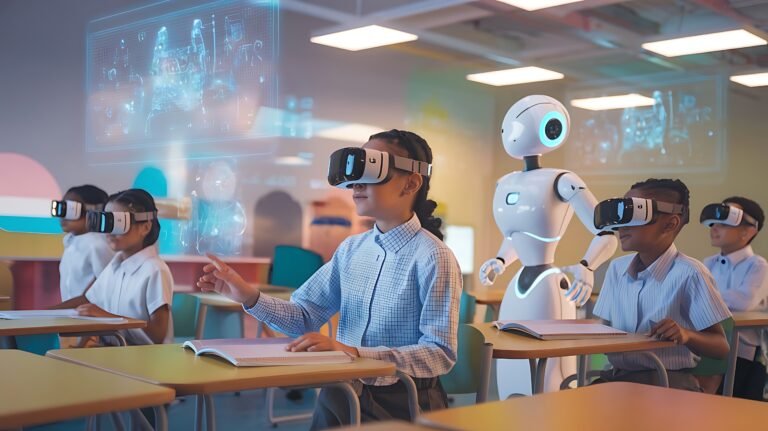
As AI technology continues advancing, learning platforms will become even more sophisticated in their personalization capabilities. Virtual reality simulations, augmented reality training, and advanced natural language processing will further enhance the learning experience while maintaining accessibility.
2. Global Standardization with Local Customization
Future AI-powered platforms will achieve the optimal balance between global standards and local customization, ensuring that learners everywhere receive world-class education while respecting cultural and economic contexts.
3. Institutional Collaboration
Traditional educational institutions are beginning to collaborate with AI-powered platforms rather than compete against them. This collaboration will likely accelerate the democratization of career opportunities by combining institutional credibility with technological innovation.
The Democratization Revolution is Here
AI-powered learning represents more than just technological advancement—it’s a fundamental democratization of career opportunities that’s reshaping how we think about professional development. By removing geographic, financial, and institutional barriers, these platforms are enabling millions of learners to access career opportunities that were previously out of reach.
The transformation is already underway, with market growth rates exceeding 50% annually and major employers increasingly recognizing skills over credentials. For learners, the message is clear: the barriers that once limited career opportunities are rapidly disappearing, replaced by AI-powered pathways that adapt to individual needs and circumstances.
Platforms like AiXQP exemplify this democratization in action, connecting students from tier-3 towns with global career opportunities while providing the personalized support needed for success. As this technology continues evolving, we can expect even greater democratization of career opportunities, creating a more equitable and merit-based professional landscape.
The question isn’t whether AI-powered learning will democratize career opportunities—it’s how quickly individuals and organizations will embrace this transformation to unlock human potential at unprecedented scale. The revolution is here, and it’s making career success accessible to everyone with the motivation to learn and grow.